




When thinking about the tens of thousands of treasures housed at Down County Museum, the humble toilet is perhaps not the first object that springs to mind. Yet, it is just one of the many intriguing ceramic pieces collected by the museum over the past four decades. From 13th century roof tiles to 19th century china, the collection showcases the multitude of uses of this versatile material.
In this short blog, we will take a closer look at a small sample from the collection. However, there remain hundreds more to explore on a free visit to Down County Museum, where the history of Down is collected, researched and interpreted for future generations.
The Mantelpiece Museum
In homes around the world, the mantelpiece often stands at the heart of a room. Alongside its more practical uses, it is also a small but important space for personal expression. In the 19th century, the Victorian fireplace could be described as a museum in its own right, with fossils, souvenirs and decorative objects proudly displayed alongside candles and other trinkets. During the 1800s, no carefully curated mantelpiece was complete without a Staffordshire figure. Named for their place of origin, these eclectic ornaments portrayed everything from romantic scenes and political leaders to royalty, popular celebrities, and perhaps most famously, the spaniel dog.
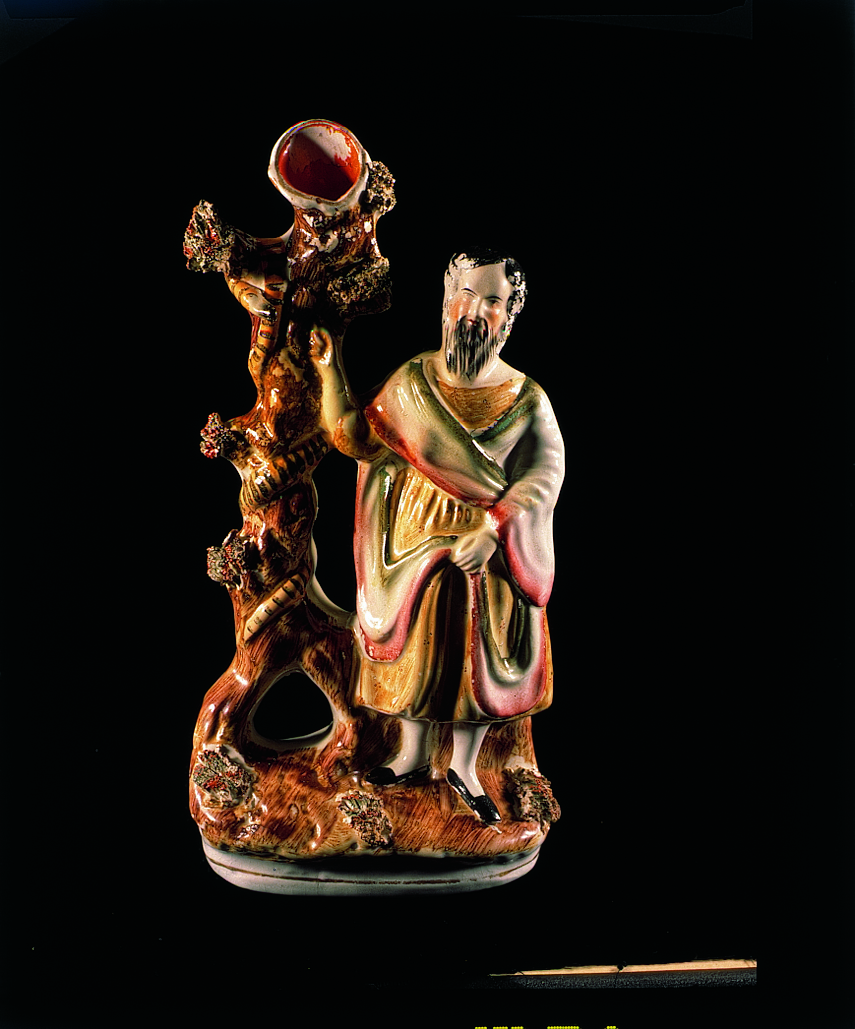
DOWDM:1993_275 – Ceramic figure of St. Patrick
The museum’s collection includes an example of the classic “flat back,” a style intentionally crafted for display on a shelf or mantel, with decoration only to the front. Depicting a cheerful St Patrick, it represents the familiar traits of Staffordshire figures, showing the saint in his traditional robes along with some lesser-known rosy cheeks. Perhaps County Down’s most famous permanent resident, St. Patrick’s grave can be visited a stone’s throw from the museum doors.
Potty about Porcelain
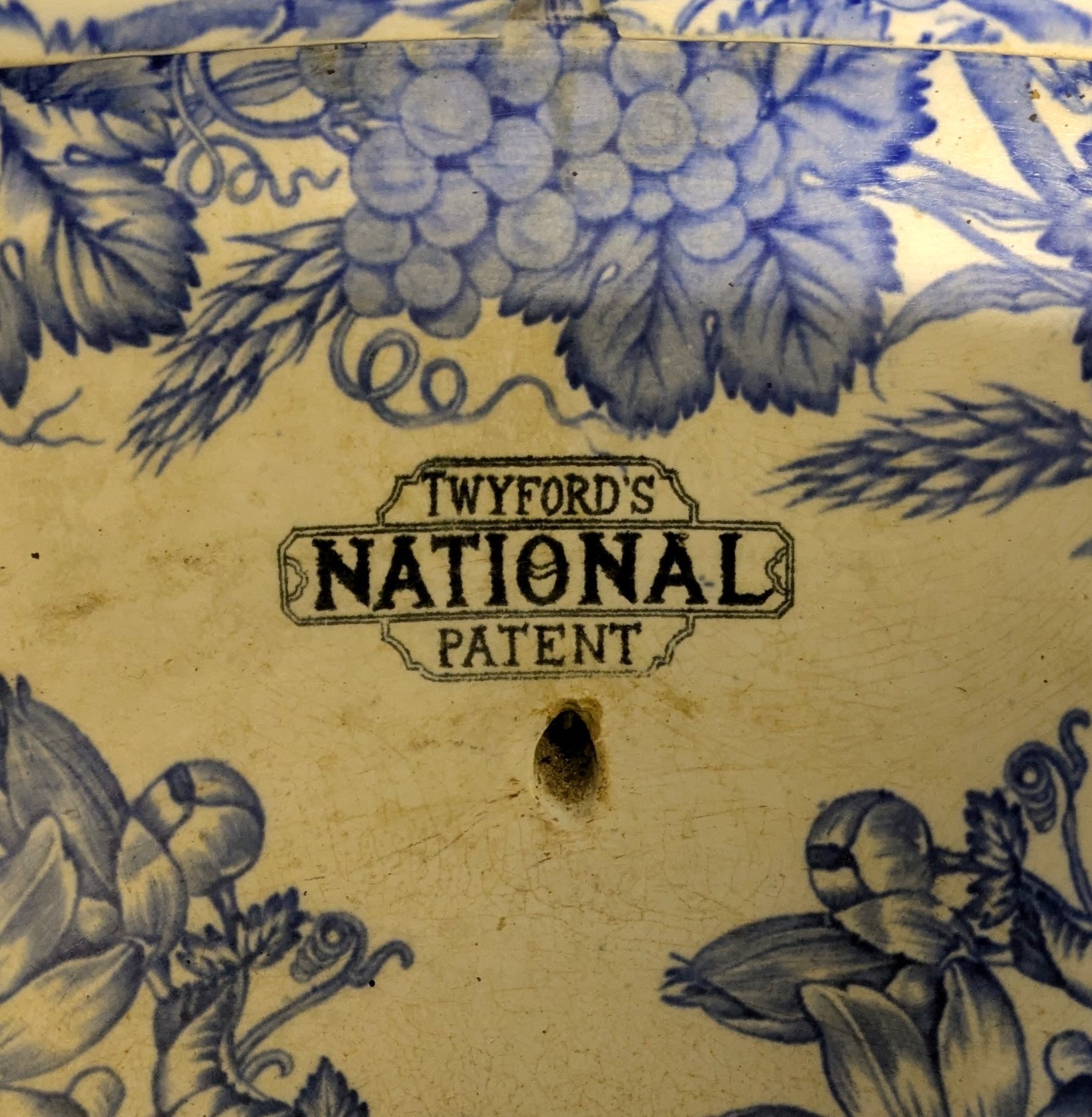
DOWDM:1997_598 - Twyford's National Patent Toilet
A toilet might seem an unconventional choice for a discussion on ceramics, but by the 19th century, when flushing toilets became increasingly popular, another opportunity for Victorian flair was born. The museum’s example is the Twyford’s “National” model, patented in 1879 by English pottery manufacturer Thomas William Twyford. Marketed as a ‘wash-out’ water closet, this early flushing toilet was extremely popular until the mid-1880s. Made from glazed porcelain, it is both practical and beautiful, with decorative moulding and a blue floral transfer pattern inside the bowl. While modern toilets may not be known for their aesthetic qualities, a recent resurgence in Victorian design has seen a return of the beautiful throne to 21st century bathrooms.
Pots, Plates and Politics
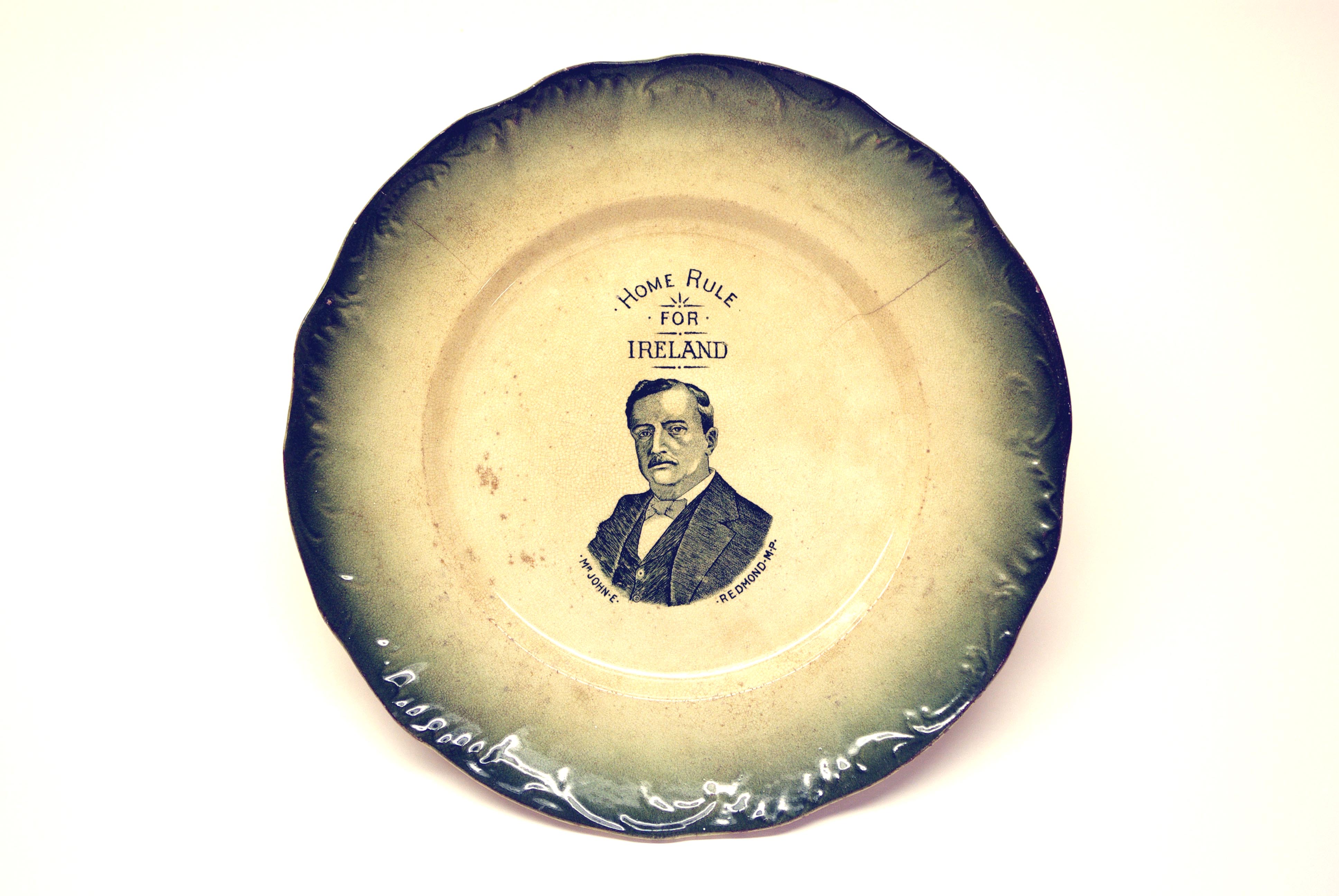
DOWDM: 2007_52 – Home Rule Ceramic Plate of John Redmond
Although associated with practical and decorative purposes, ceramics have also been used as a medium for social and political expression. Far beyond mere ornamentation, ceramic designs have been used to challenge ideology, spread propaganda, support civil rights movements, and question authority.
On display in the museum are two examples featuring John Redmond, former leader of the Irish Parliamentary Party, and Sir Edward Carson, a prominent Irish unionist politician. Fierce political rivals, Redmond and Carson embodied opposing visions for Ireland’s future during the Home Rule debate. These commemorative plates, dating to c.1900, capture the intensity of the national conversation at the beginning of the 20th century. Both are on display alongside one another in the Governor’s Residence, where the story of Down from pre-history to the present day can be explored in our Down Through Time exhibition.
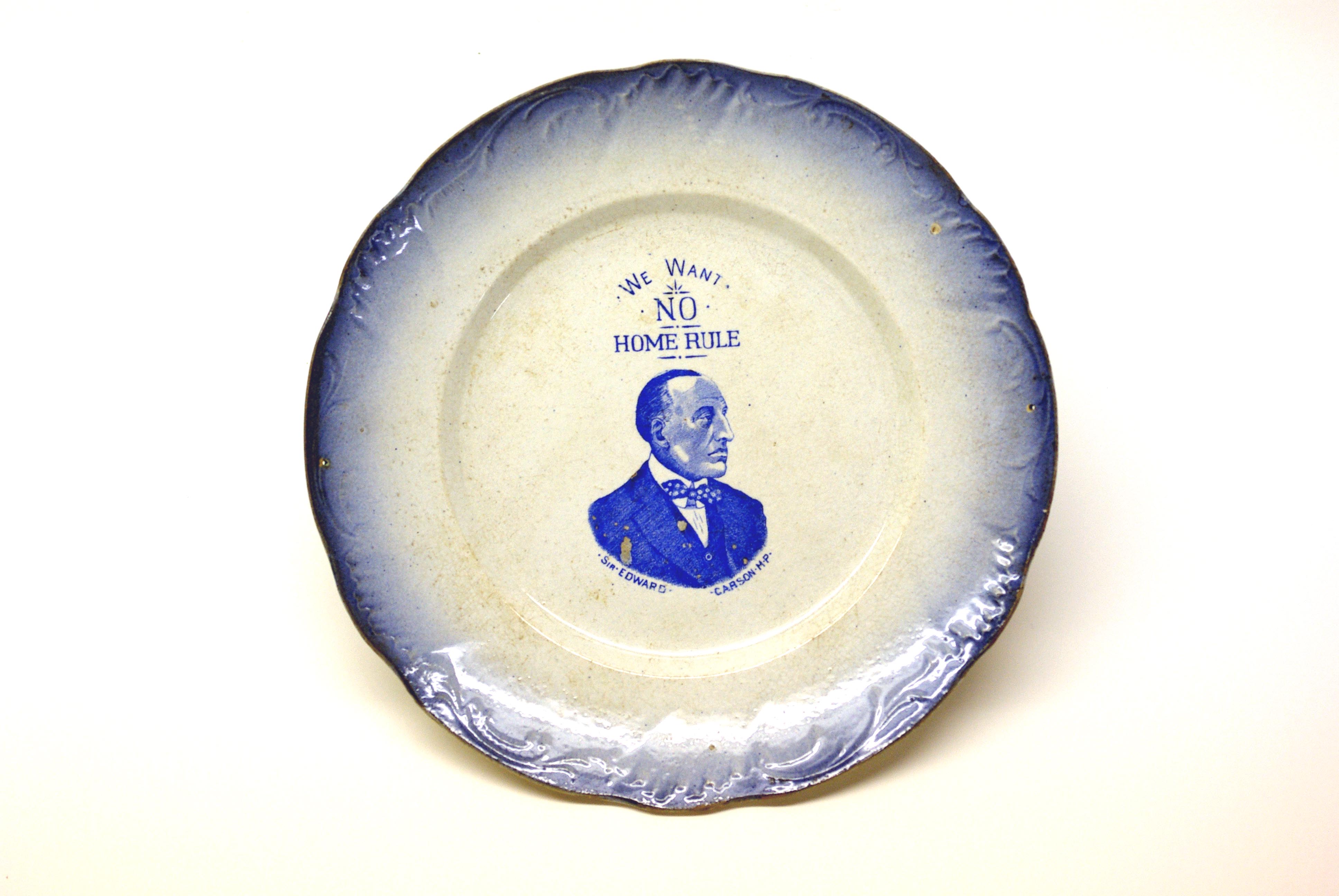
DOWDM: 2007_53 – Home Rule Ceramic Plate of Sir Edward Carson
From Down with Love…
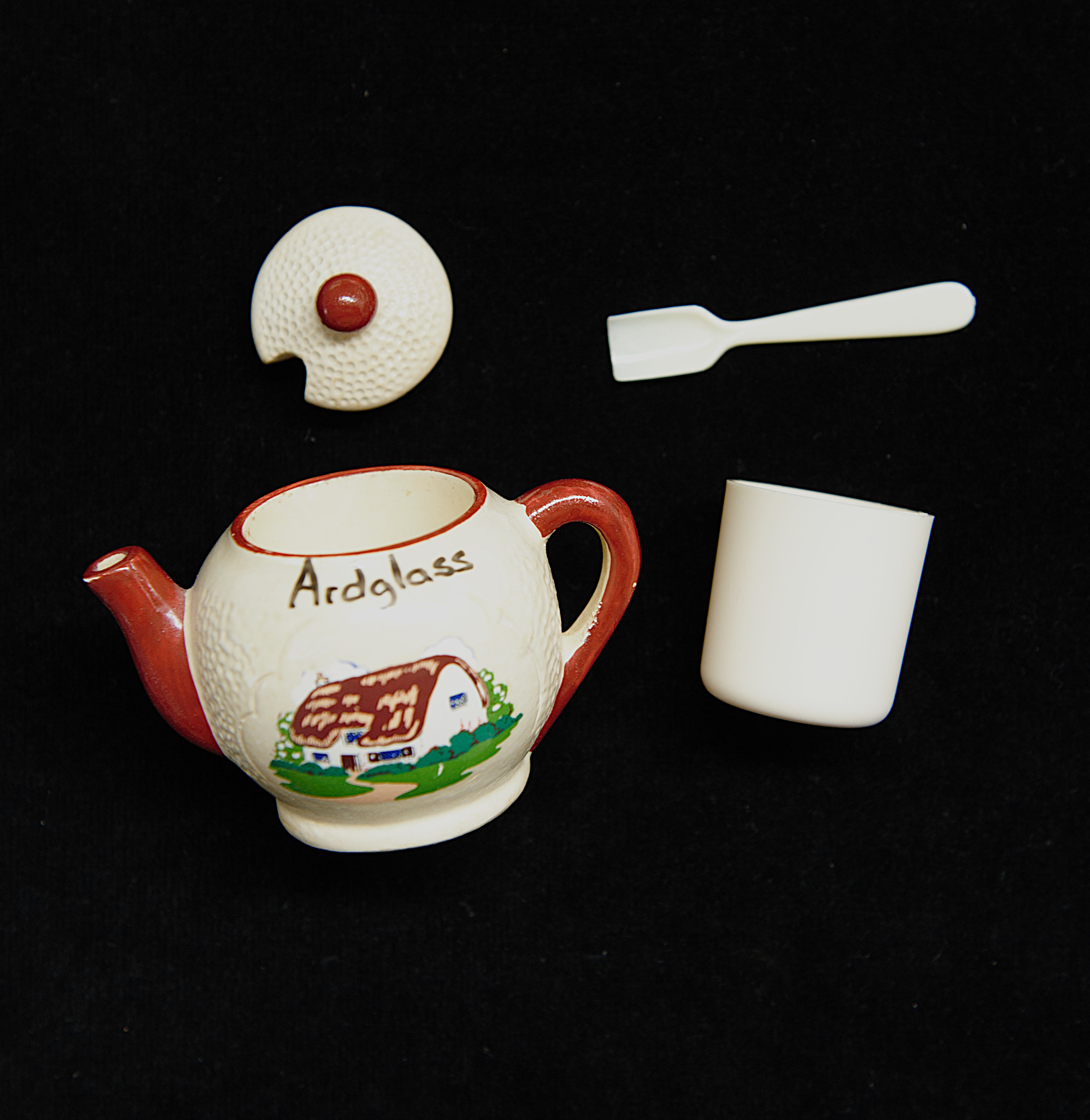
DOWDM:2001_9 – Ceramic mustard pot – Ardglass
By the 19th century, County Down had emerged as a popular tourist destination with the advent of the new and expanding railways. Seaside towns in particular were flourishing, with Victorian and Edwardian visitors keen to take a piece of their holiday back home. Thus, the golden age of souvenir pottery was born. These ceramic pieces were often collected as memories or to be gifted to friends. The museum has a number of examples with images of holidaymakers or well-known topographical scenes transfer printed onto numerous vessels. One example from Ardglass in the shape of a teapot is in fact a mustard pot, with a traditional thatched cottage. Another example shows three figures in the snow with the words “A present from Newcastle” printed in gold.
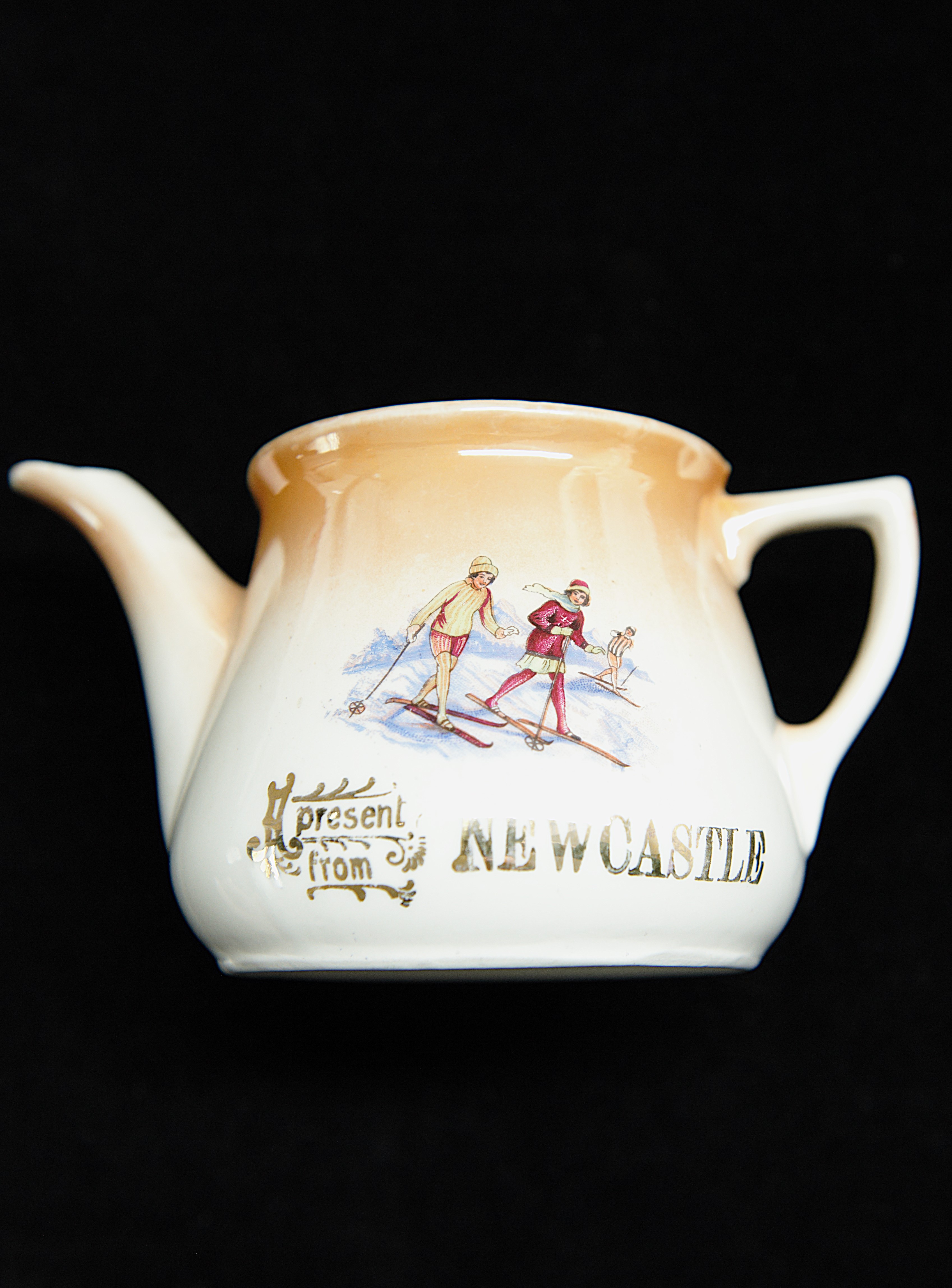
DOWDM:2014_162 – Ceramic teapot – Newcastle
From decorative items, hygienic vessels, sources of political discourse, and souvenirs, ceramics have had a variety of both beautiful and practical uses across the centuries. Why not discover more on a visit to Down County Museum where these treasures, along with thousands of others can be explored.