




Fossils are the remains of once-living prehistoric plants, and animals, and they can tell us a lot about the natural history of our planet.
While bones, teeth, shells and even plants have the potential to become fossils, it is a very rare event that needs to happen under certain conditions. Most of the fossils discovered originated from water-based creatures that lived near rivers or the sea. For a living organism to be fossilized, its body must be covered in silt and mud, which allows the skin and muscles to decompose while protecting the bones and teeth. Over time, more sediment covers the remains. While this happens, water seeps in, turning the bones and teeth to stone. The process takes thousands and even millions of years to achieve.
While many of us associate fossils with dinosaurs, it is incredibly rare to find evidence of their existence in Ireland. Some locations have ideal conditions for finding fossils, such as the Jurassic Coast in the south of England or the Badlands National Park in South Dakota, USA. However, in Ireland the only verified dinosaur remains ever found were two bones discovered by the late Rodger Byrne at Islandmagee, County Antrim.
This is because the rock layers that makeup Ireland's geology are often too old, predating the age of dinosaurs, or too young, missing the dinosaurs by several million years. So, while dinosaurs roamed the prehistoric Mournes, it's unlikely that any of them became fossils.
While we might not have a T-Rex hidden in our stores, Down County Museum is home to a selection of fossils found in and around the county.
This cross-section of fossils comes from marine-based fauna and flora. This carboniferous limestone, found along the shore near Kilkeel, includes a colony of coral and shows evidence of sea animals boring into it.

Carboniferous limestone (DOWDM_1993_214_1)
These ammonite fossils were discovered around the Downpatrick, Ardglass and Strangford areas. Ammonites were part of the Cephalopod family and are a distant ancestor to the octopus, squid, cuttlefish, and nautilus. While the ammonites at Down County Museum are small, the largest example found is nearly 3 meters in diameter. It was discovered in the German village of Seppenrade in 1895.

Ammonite fossil (DOWDM_1993_199_1)
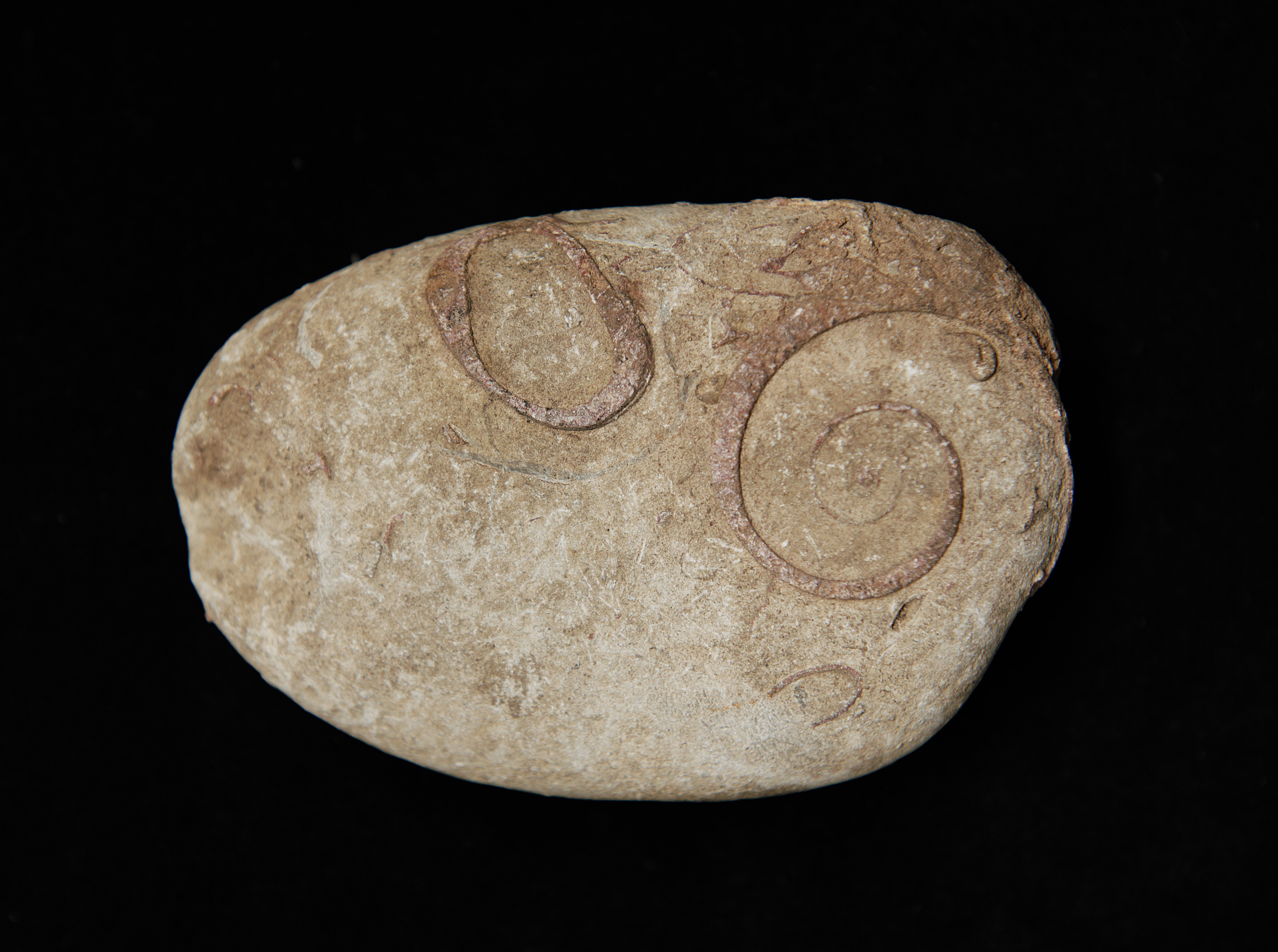
Ammonite fossil (DOWDM_1993_199_1)
While plant-like in appearance, these Crinoid Stems are marine invertebrates similar to starfish and sea urchins. Discovered by Dr Norman Moles at Castle Espie beside Strangford Lough, they are one of the oldest items in our collection. They predate the dinosaurs by 300 million years and still exist today, making them one of the oldest living species in the world.

Crinoid Stems (DOWDM_1994_225)
These fossils provide a glimpse into the diverse and astonishing collection of County Down's rich natural and geological history. Who knows what you might find on your next trip to the seaside? Discover more for free at Down County Museum!