




It has been almost a year since the devastation wrought upon the Walled Garden and wider forest park. In those first few weeks all available hands were hard at work with chainsaws and chippers to clear the fallen and damaged trees from critical areas within the park. We were the longest closed park; due to the extent of damage it took us three weeks to get the park back into useable state. Even with that you don’t have to wander far from the main paths to find areas yet to be sorted.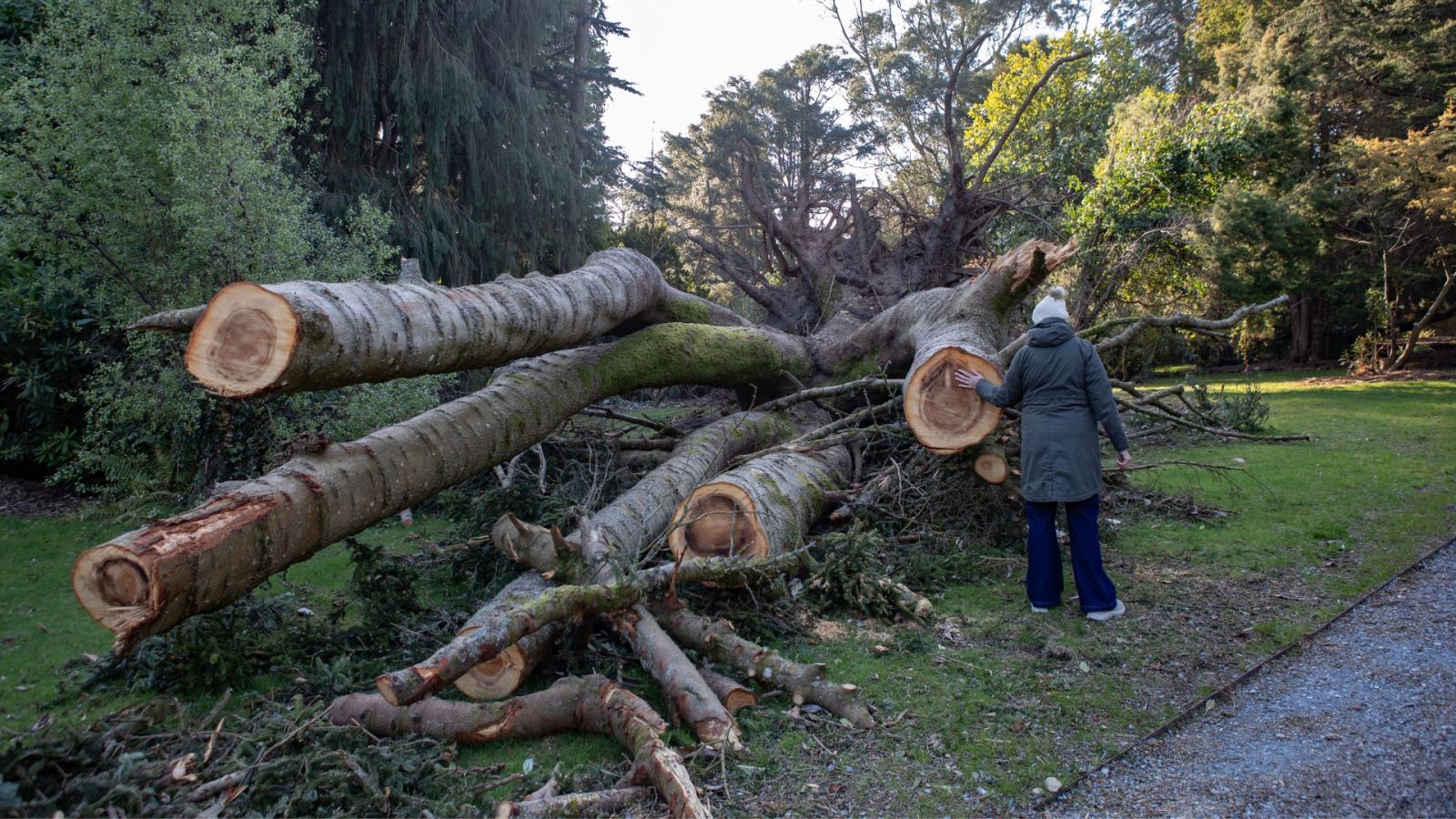 Photo: Storm Damage in Castlewellan Forest Park (March 2025) Credit Andrew Mackin Photography
The cost of the damage was astronomical, at conservative estimates it costs around £750 per tree, and that cost increases with the difficulty of the tree. When multiple trees have fallen on one another it creates a very dangerous situation and skilled tree surgeons are required. Even solitary fallen trees can behave in unexpected ways as the clearance work begins which can result in tonnes of wood moving at speed! We are very grateful to everyone involved in clearing the storm damage and those who are still working on it today.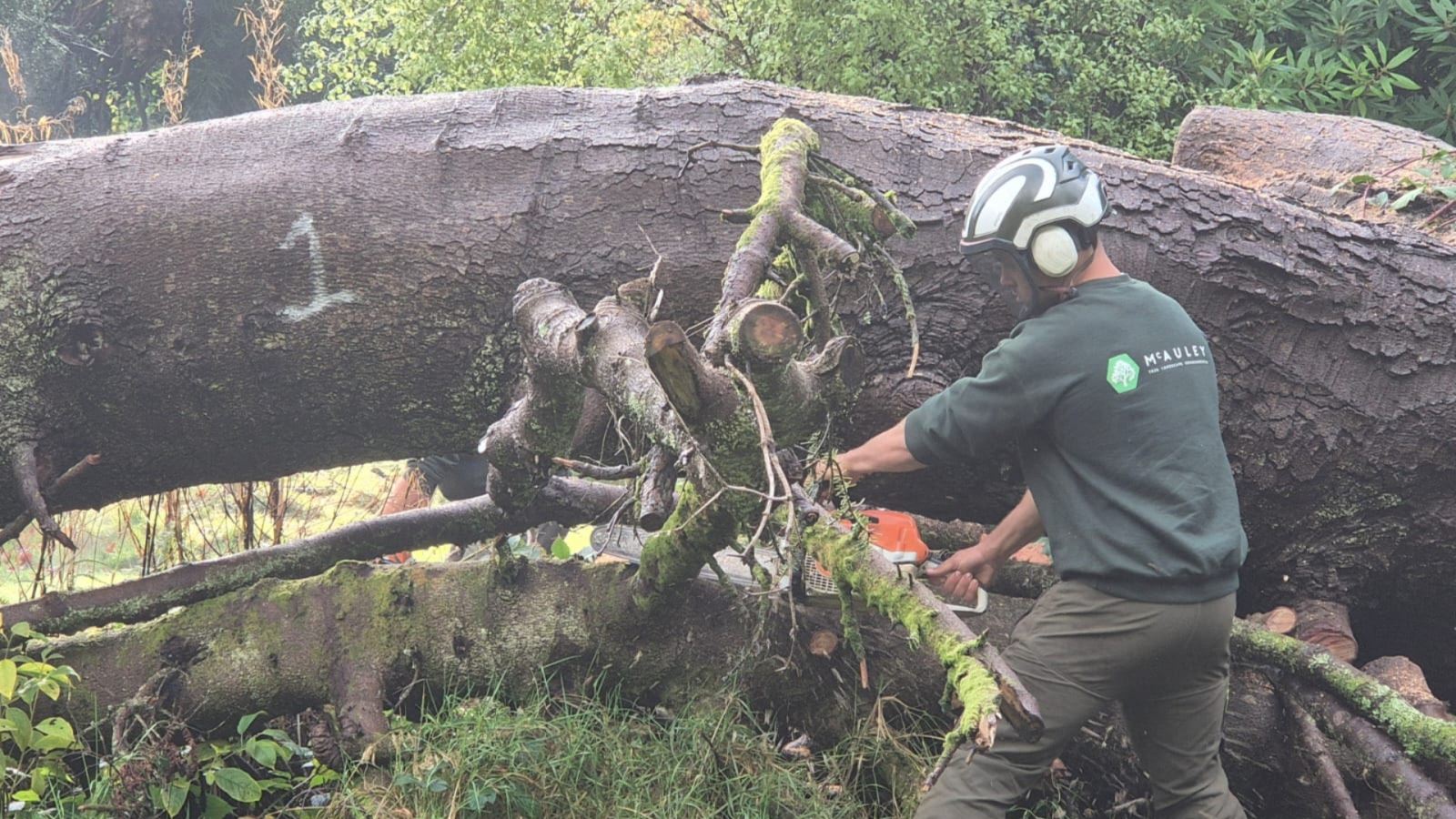
Photo: Tree surgeon prepping the tree for clearing
he walled garden and its neighbouring shelter belt we lost around 120 trees and gained a sizeable hole in the wall where the shelterbelt had crashed over it. The majority of the fallen trees were cleared in February as part of the initial clearance works. However, that left behind many stumps, piles of wood and the very large Abies numidica, Algerian Fir, lying around the garden. Many of the surviving specimen trees in the lower part of the garden took a severe battering and had torn limbs and other damage. Needless to say, the garden was not in a fit state to open. We were fortunate that The National Lottery Heritage Fund granted us an uplift to our initial funding request to facilitate garden repairs. Like much of the restoration work it has not been plain sailing, drainage issues combined with a very wet start to the autumn meant that the ground was too wet to facilitate the entrance of large machinery into the garden through the hole in the wall, which we had temporarily retained for the purpose. For most of the clearance work this wasn’t a problem, as smaller machines were able to cope, however, when it came to the Abies it was a problem. The Orchard gate is too narrow for the large heavy machinery, so the tree surgeons had to adapt their technique to clear the Abies. Primarily this meant cutting the Abies into smaller sections than originally planned, this took a certain amount of trial and error! At one point when I went to check on their progress the grabbing machine was wiggling its bottom in the air as it was trying to lift a section of Abies that was decidedly too heavy. However, with the application of patience and persistence the tree surgeon team cleared away the large tree and righted the stump. Next up is the stump grinder to clear away as much of the large stump as possible.
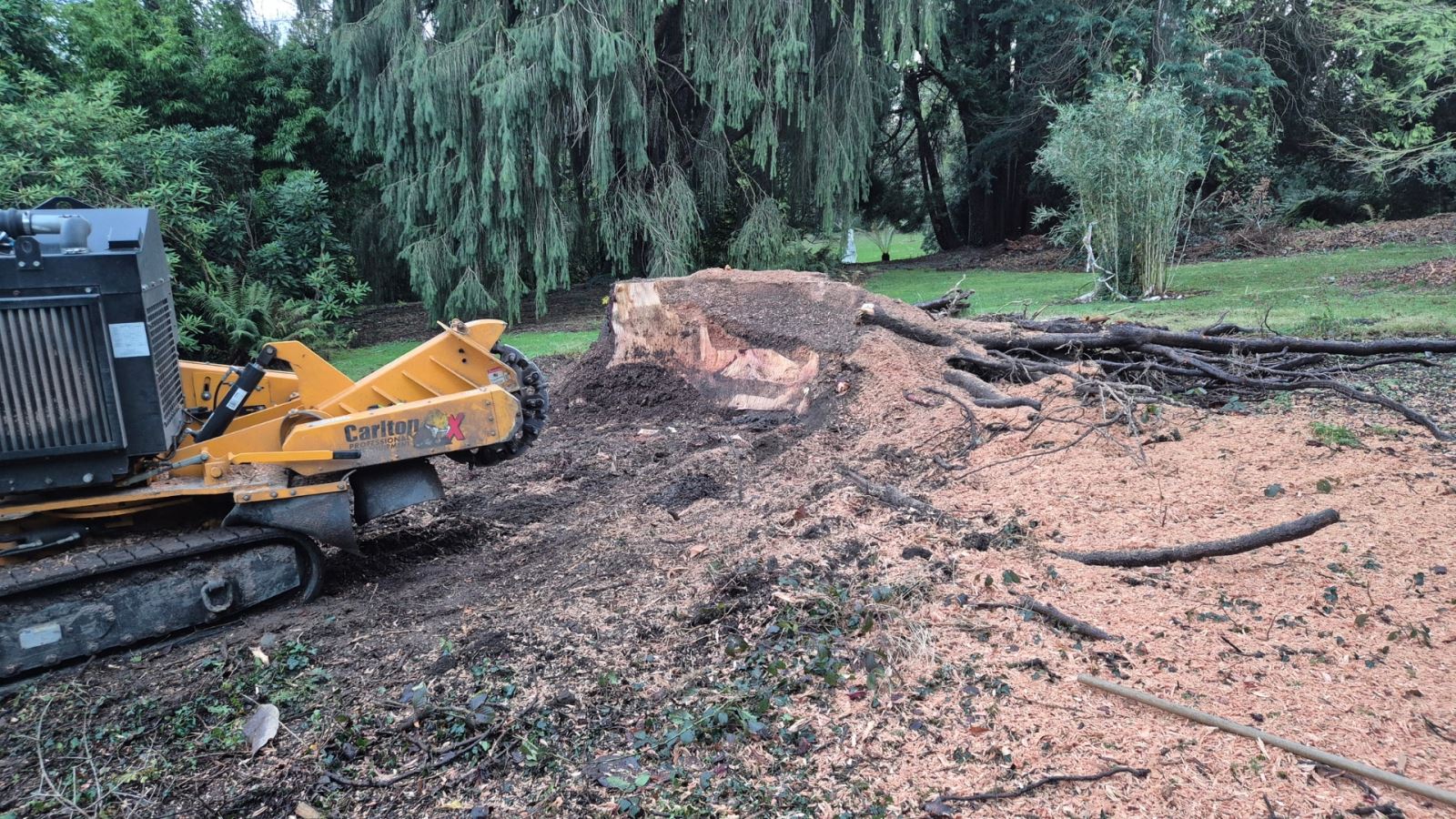
Photo: Stump grinder hard at work; half the stump to go
So far, all the piles of wood and stumps have been removed and the specimen trees tidied; the only task outstanding is landscaping of the ground so that it’s ready for planting. It won’t look completely healed until the grass gets going in the spring. The Gardening team, ably assisted by our very keen volunteers, have been busy planting new specimen trees to replace those lost in the storm. They have recently begun planting a new shelter belt which in time will replace the one that toppled over the wall.
The garden is entering the last stages of its spruce up. The final touch will be getting a nice surface on the paths and the Heron fountain working once again. It has proved a lot more temperamental than the Mermaid fountain, but we are determined and will have it working for the garden reopening, which is due in the Spring. We think it will be worth the wait especially as the garden awakens for another growing season and the colour returns.
Find out more about Castlewellan Historic Demesne here.

The Castlewellan Arboretum and Annesley Garden is situated north of the foothills of the Mourne Mountains in County Down, Northern Ireland.
Castlewellan Forest Park is located on Forest Park View, Castlewellan, County Down, in a dramatic setting of mountains and sea. Castlewellan Forest Park has one of the most outstanding tree and shrub collections in Europe. The beauty, vigour and perfect shape of the trees in the National Arboretum attract tree enthusiasts from around the world.